

This article has not yet been professionally approved. The information is based on the sources listed below.
Linseed for horses: variants and feeding context
Whole seed, crushed or processed linseed and linseed oil differ. Here is how to check the product, its preparation and its contribution to the ration.
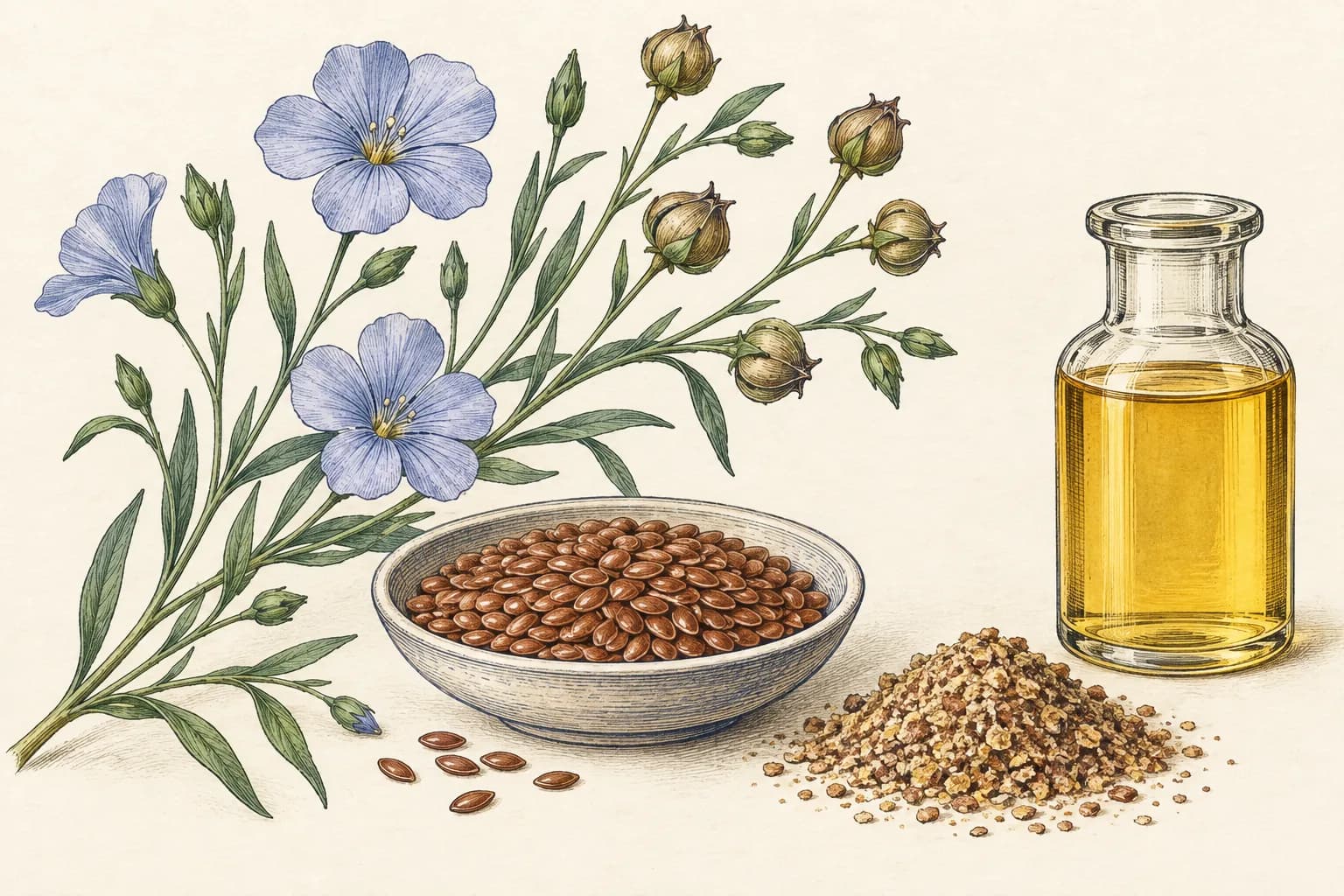
The short answer
Linseed is a feed containing fat and other nutrient fractions; linseed oil and the seed are therefore not the same thing. Decide on the specific product and its processing first. The Gruber Table (a Bavarian feed value reference) points to cyanogenic compounds and the limited shelf life of crushed seed; a single preparation method for all variants cannot be derived from this 1.
Which variant do you actually have in front of you?
Distinguish between whole seed, crushed seed, heat-treated products and oil. The nutrient tables treat linseed, linseed extraction meal and other oilseed products separately. So do not use seed values for oil, nor feed values of a press residue for whole seed 1.
| Variant | Your check question |
|---|---|
| Whole or crushed seed | What processing and storage does the product require? |
| Heat-treated product | Is the processing step documented? |
| Linseed cake or meal | Which analytical values apply to this product? |
| Linseed oil | How much oil is already in the daily ration? |
Product check before calculating the ration; the variants are not interchangeable doses.
Do you have to cook or soak linseed?
The Gruber Table describes heat treatment in connection with the safety of linseed feeds. Simply soaking is not a documented heat treatment. For a ready-to-feed product, check its specific instructions; for raw material of unclear status, you should clarify processing and use with a feeding specialist 1.
- Read the preparation instructions for the specific feed in full.
- Do not transfer soaking time and water quantity from another product.
- Check shelf life and storage instructions, especially after opening or crushing.
What do omega-3 studies show – and what not?
A study with 18 yearlings compared ground linseed, fish oil and a control ration over 70 days. The sources changed fatty acid patterns differently; linseed and fish oil were not equivalent sources for the blood and cell profiles studied. The study does not support any promise of healing for skin, digestion or joints, nor a general linseed dose for your horse 2.
How do you fit linseed into the whole ration?
Additional fat contributes to the energy supply. So plan any change together with forage and concentrates; a good doer raises a different ration question from a horse that does not hold its weight despite suitable forage feeding 3.
- Define the goal: which evidence-based ration question should the feed answer?
- Weigh the dry product quantity and note the feeding days.
- Also record existing oil, seed and mash products.
- If there are health concerns, first discuss the cause with your vet rather than trying out a supplement.
Key takeaways
Frequently asked questions
Are linseed oil and linseed the same thing?
No. Oil is a fat source; the seed also contains other nutrient fractions. In the ration calculation, both must be entered with their respective feed values 1.
How much linseed does every horse need?
There is no fixed mandatory amount here. Check the variant, daily ration, energy requirement and feeding instructions; do not automatically use a study amount as a personal dose 12.
Can I try linseed for digestive problems?
Have the problems checked by your vet first. This article provides no diagnosis and no therapeutic feeding instructions.
Sources & studies
The content is based on the references listed below. It does not replace individual veterinary or feeding advice.
Show list of sources (3)
- Bayerische Landesanstalt für Landwirtschaft (LfL): Gruber Tabelle zur PferdefütterungPractical reference table with requirement and feed values based on the GfE recommendations; the basis of many ration calculations in German-speaking countries. Chapter 9.3, Table 39: most common poisonous plants for horses with habitat, toxicity and risk level (after Kamphues et al. 2014)
- Vineyard KR, Warren LK, Kivipelto J (2010): Effect of dietary omega-3 fatty acid source on plasma and red blood cell membrane composition and immune function in yearling horses. Journal of Animal Science 88(1):248–25718 Quarter Horse yearlings: encapsulated fish oil, ground linseed or control for 70 days. Evidence that marine and plant omega-3 sources affect the fatty acid profile differently
- Liburt NR (2026): Feeding Practices in Horses and Other Equids. Merck Veterinary ManualSpecialist overview, as of February 2026: forage basis, concentrates as required, bran/mash and Ca:P balance, gradual feed changes. No efficacy study on commercial mash products.