

This article has not yet been professionally approved. The information is based on the sources listed below.
Concentrates – only when needed
Many leisure horses need little or no concentrate feed. Too much starch per meal can upset the balance in the large intestine.
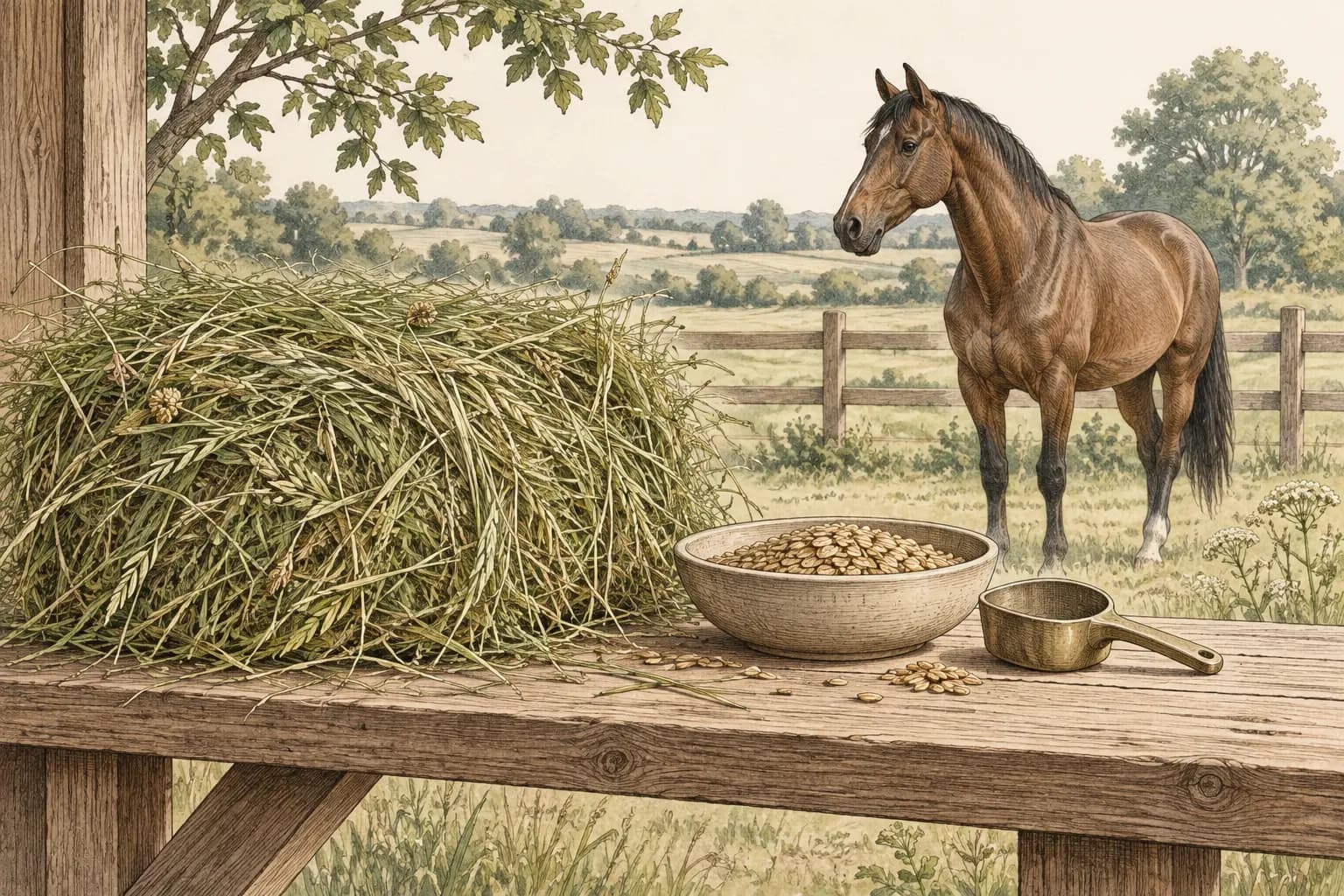
Concentrates such as oats, muesli, pellets or energy-rich mixes are not necessary for every horse. Many leisure horses do well on sufficient good-quality forage 1.
- High workload
- Poor doers
- Breeding and lactation
- Regaining weight after weight loss
- Certain situations in older horses
The starch trap
If the amount of starch per meal exceeds the digestive capacity of the small intestine, undigested starch floods into the large intestine. There, lactate-producing bacteria multiply explosively, the pH drops and fibre-digesting bacteria die off – in the worst case, colic or laminitis can follow 12.
Sources & studies
The content is based on the references listed below. It does not replace individual veterinary or feeding advice.
Show list of sources (4)
- Coenen M, Vervuert I (2020): Pferdefütterung. Begründet von H. Meyer. 6., aktualisierte Aufl., Georg Thieme Verlag, Stuttgart. ISBN 978-3-13-241778-6Standard reference work on equine nutrition in German-speaking countries; Table 4.17 mineral recommendations (recommended supply and minimum requirement), Table 4.18 derived sweat volumes per work level and weight class, Table 4.19 electrolyte performance requirement per sweat volume (in addition to maintenance requirement)
- Prof. Dr. Ingrid Vervuert – Institut für Tierernährung, Universität LeipzigResearch on starch digestion, glycaemic/insulinaemic responses and phytotherapeutics in horses
- GfE (2014) – Empfehlungen zur Energie- und Nährstoffversorgung von PferdenSpecialist reference in German-speaking countries (GfE, German Society of Nutrition Physiology), Committee for Requirement Standards
- NRC – Nutrient Requirements of Horses, 6th ed.International reference for the nutrient requirements of horses (National Research Council)