

This article has not yet been professionally approved. The information is based on the sources listed below.
Mash for horses: composition, occasions and ration context
What you should check about composition, dry feed quantity and preparation before a mash meal – without inferring an effect from the product name.
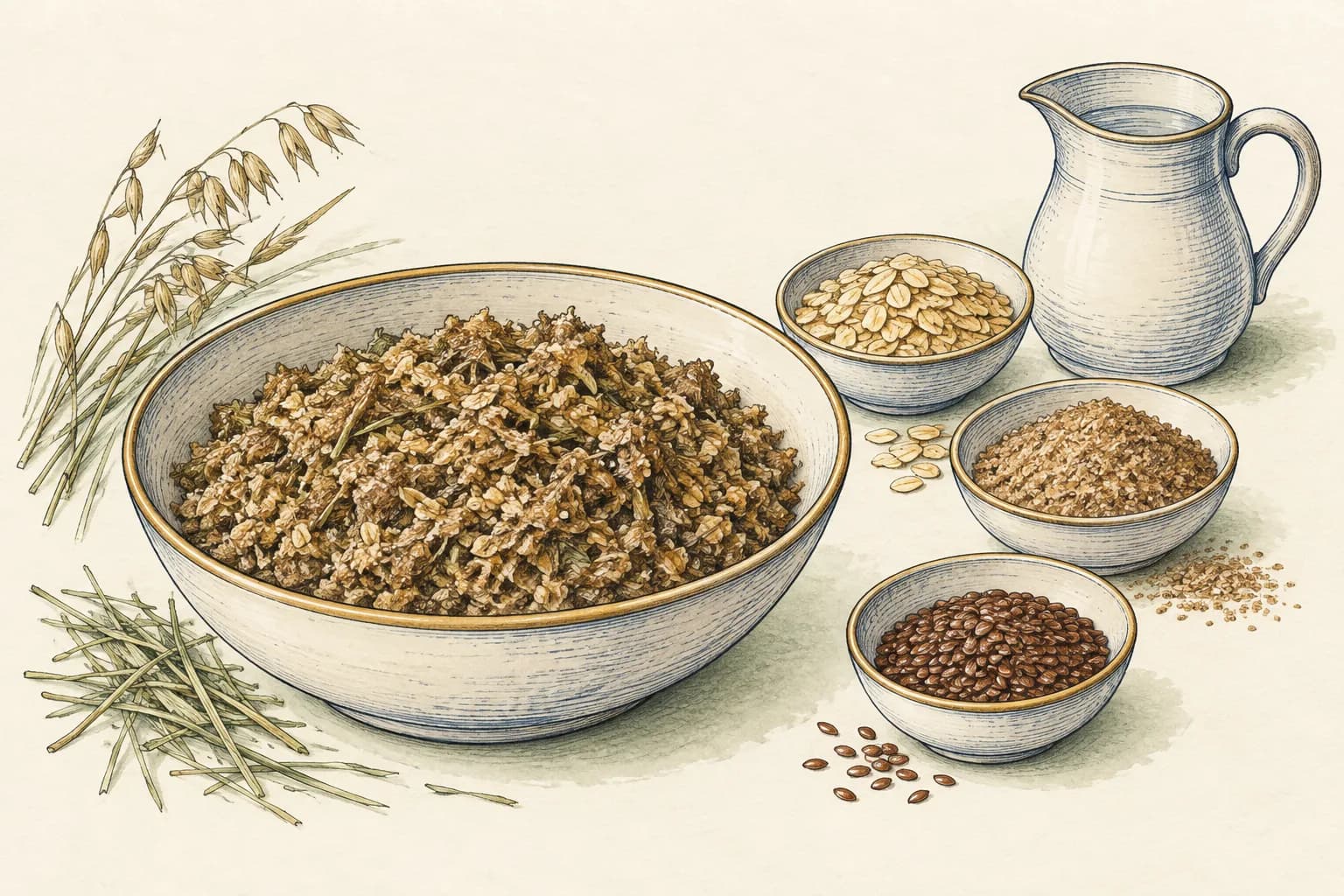
The short answer
Judge a mash by its composition and the dry feed quantity. A moist feed mash is not automatically balanced in minerals or a remedy for digestive problems. With bran-heavy mixes in particular, the calcium-phosphorus supply of the whole ration must fit 1.
What is in your mash?
Read the composition and directions for use of the specific product. The labelling distinguishes ingredients, analytical constituents and additives. Whether cereals, linseed feeds or other components are included must therefore be checked for the individual product; the name alone does not replace this information 2.
- Note the product name and the full declaration.
- Ask for sugar and starch figures if these are missing for your ration question.
- Check whether minerals and vitamins have been added.
- Distinguish an additional meal from a replacement for existing feed.
Why does the dry feed quantity count?
Water changes the mass in the bucket, but it adds no energy from feed. The calculation needs the quantity of the original product and its reference basis. A made-up quantity example: 200 g of dry product plus 600 g of water gives 800 g of prepared mash; 200 g is still recorded as the product quantity. Separating fresh mass, dry mass and nutrient content is part of calculating the ration 3.
- Weigh the product before soaking.
- Also note the water added and the preparation instructions for the yard routine.
- Record whether your horse actually eats the whole prepared portion.
Is mash automatically useful for special occasions?
An occasion such as cold weather, coat change or a rest day is first of all a question you can check: what changes in the actual requirement or in the current feeding? Do not derive an extra meal from this alone. The Gruber Table plans rations based on weight, condition and work 3.
For bran mash, the widespread idea of a laxative effect is not supported by the evidence. The Merck overview warns of digestive upsets after abrupt changes with larger, irregular amounts of bran. This does not mean every product called mash is ruled out; it is a statement about bran and changes in feeding 1.
How do minerals and preparation fit together?
Bran provides a lot of phosphorus and little calcium. What matters is therefore the ratio across the whole diet, not just a single ingredient 1. For a ready-made product, also check the added minerals and its intended feeding quantity.
- Follow the manufacturer's soaking time, water ratio and temperature instructions.
- Plan preparation so that the feed is offered fresh as instructed.
- Record changes so that everyone who feeds the horse can follow them.
- If there are chewing or swallowing problems, have the mash chosen with specialist advice; a soft consistency alone does not answer this question.
Key takeaways
Frequently asked questions
Can my horse have mash every day?
Check the specific product, its instructions and the whole ration. A bran-heavy feed requires a suitable calcium-phosphorus balance; a rule for all mash products cannot be derived from this 1.
Does mash have a laxative effect?
According to the specialist overview, bran is not a laxative. Digestive upsets after unaccustomed bran feeding should not be equated with a desired effect 1.
What quantity do I enter in the ration?
The quantity of the original product on the reference basis of its declaration, not the weight of the finished water and feed mixture 3.
Sources & studies
The content is based on the references listed below. It does not replace individual veterinary or feeding advice.
Show list of sources (3)
- Liburt NR (2026): Feeding Practices in Horses and Other Equids. Merck Veterinary ManualSpecialist overview, as of February 2026: forage basis, concentrates as required, bran/mash and Ca:P balance, gradual feed changes. No efficacy study on commercial mash products.
- Verordnung (EG) Nr. 767/2009Placing on the market and use of feed, labelling and claims; definitions of complete feed (Art. 3(2)(i)) and complementary feed (point (j)), content of feed additives (Art. 8), feeding instructions (Annex II No. 4). Link to the current EUR-Lex consolidated version (as of 26 December 2018).
- Bayerische Landesanstalt für Landwirtschaft (LfL): Gruber Tabelle zur PferdefütterungPractical reference table with requirement and feed values based on the GfE recommendations; the basis of many ration calculations in German-speaking countries. Chapter 9.3, Table 39: most common poisonous plants for horses with habitat, toxicity and risk level (after Kamphues et al. 2014)