

This article has not yet been professionally approved. The information is based on the sources listed below.
Doping and withdrawal periods in competitive sport
Many native herbs can be relevant for competitions. How the ADMR and FEI regulate their classification and why product form and concentration are decisive.
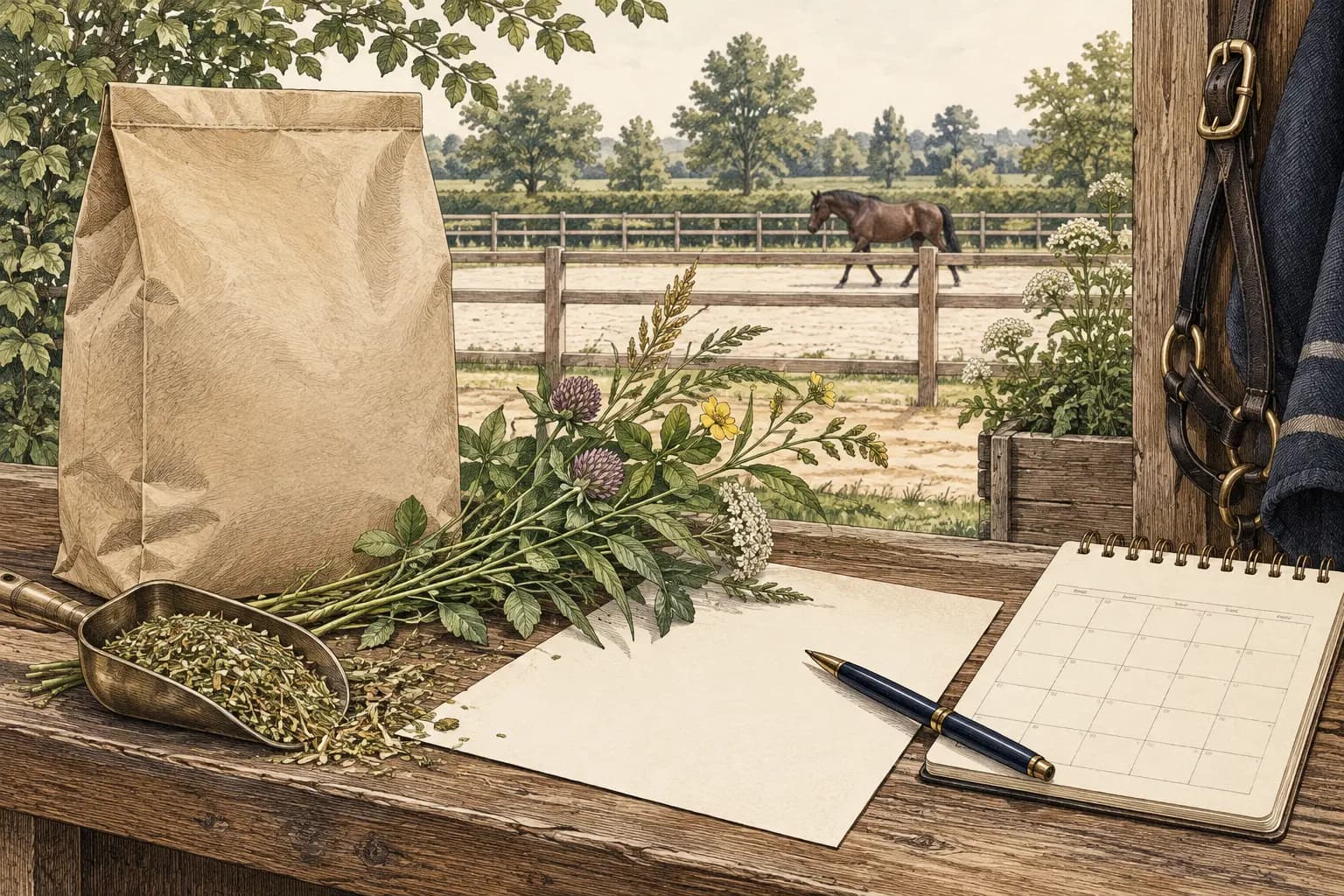
In competitive sport, anti-doping and medication control rules are meant to protect the integrity of the sport and the welfare of the horse. Nationally in Germany, the ADMR of the FN (German Equestrian Federation) applies; internationally, the FEI's Equine Prohibited Substances List (EPSL) 12. Both sets of rules must be checked in their current version, as their classifications are not identical 34.
No blanket withdrawal period for mixes
A specific withdrawal period can only be derived if product form, amount and concentration are known for every component and the FN has published a recommendation for it. If this information is missing, the mix cannot be conclusively assessed; at most, you can then give the withdrawal period that the FN states for cases where the conditions are not proven 3.
The longest published individual withdrawal period can only serve as a guide for a mix if all components are fully clarified. It is no guarantee of being allowed to compete 34.
Four classifications
The up-to-date lists of the FN and FEI are always authoritative. Information on withdrawal periods consists of recommendations with a safety margin and is no guarantee of being allowed to compete 34.
- Compliant according to the FN ADMR: only for the specifically named form and amount. Linseed oil, for example, is listed without any particular restriction 3.
- Dependent on amount or concentration: for many herbs such as aniseed, fennel or chamomile, the FN links the classification to the daily amount or concentration. If the conditions are not demonstrably met, it states a withdrawal period of 48 hours for most of these herbs. Brewer's yeast is only considered compliant below 150 g per day and subject to a hordenine reservation 3.
- Withdrawal period: for individual substances, the FN states a fixed withdrawal period, such as 48 hours for valerian and four days for devil's claw 3.
- Not clearly classified: if there is no FN entry under the specific name, or if it only applies to a certain product form, this implies neither approval nor prohibition. Product declaration and current rules must then be checked before competing 34.
Sources & studies
The content is based on the references listed below. It does not replace individual veterinary or feeding advice.
Show list of sources (4)
- FN – Anti-Doping- und Medikamentenregeln (ADMR)Rules in German equestrian sport
- FEI Equine Prohibited Substances List (EPSL)International list of prohibited and controlled substances in equestrian sport (Banned Substances & Controlled Medication)
- FN – Anti-Doping und Medikation (ADMR-Suchmaschine)Official database of the FN (German Equestrian Federation) on substances and withdrawal periods in competitive sport
- FEI Clean SportInternational rules on prohibited substances in equestrian sport